
The Ultimate Betting & Strategy Guide to the 2026 FIFA World Cup: 104 Matches, 16 Venues, and the 48-Team Format
The 2026 FIFA World Cup is fundamentally rewriting the rulebook of international football and sports betting. Taking place from June 11 to July 19, 2026, this historic tournament will span an exhausting 39 days. Co-hosted by the United States, Mexico, and Canada, it is the first World Cup in history to be shared across three sovereign nations. More importantly for fans and oddsmakers, it marks the first time the competition roster has expanded from 32 to a massive 48 participating teams.
For sports bettors, analysts, and operators, this expansion is a game-changer. The total number of fixtures will skyrocket from the traditional 64 to an unprecedented 104 matches. This creates a vastly more complex betting landscape, featuring new team matchups, unpredictable travel fatigue factors, and an unparalleled volume of in-play betting opportunities. Miscalculating the operational scale of this tri-nation tournament can lead to severe strategic blind spots regarding qualification paths and team advancement probabilities.
To give you the winning edge, we have meticulously researched the architectural blueprint of the tournament. Below, we decrypt the exact qualification metrics, the mathematically rigorous new bracket system, and the geographic intelligence you need to master the largest tournament in FIFA history.
The Mathematics & Mechanics of the 48-Team Format
Global Expansion and Confederation Allocations
The operational framework of the 2026 FIFA World Cup relies on a 50% increase in team participation. This expansion permanently alters the global qualification landscape, significantly lowering the barrier to entry for emerging football nations. To accommodate the 48 teams, FIFA has officially recalibrated the direct allocation slots across the major global confederations:
- Europe (UEFA): 16 direct slots, ensuring the highest concentration of elite talent.
- Africa (CAF): 9 direct slots, a massive increase that will introduce dynamic new playing styles to the tournament.
- Asia (AFC): 8 direct slots.
- South America (CONMEBOL): 6 direct slots.
- North, Central America, and Caribbean (CONCACAF): 6 direct slots, which already includes the three automatic bids granted to the host nations (USA, Mexico, and Canada).
- Oceania (OFC): 1 direct slot.
The final two berths will be fiercely contested in an inter-confederation play-off tournament.
The New Group Stage Dynamics and The Round of 32
The tournament initializes with a Round-robin format, but the structure is completely revamped. The 48 teams will be drawn into 12 distinct groups of four (labeled Groups A through L). Each squad is guaranteed to execute three matches during this phase.
For bettors analyzing futures and "To Advance" props, the mathematics of qualification have become far more complex. To progress to the knockout stage, teams must rely on the following criteria:
- Automatic Qualification: The top two finishing teams from each of the 12 groups advance directly.
- The Wildcards: The 8 highest-performing third-place teams (calculated by points, goal difference, and goals scored) will secure the remaining slots.
This massive influx of advancing squads constructs a brand-new knockout tier: The Round of 32. From this point forward, the margin for error is zero. The format shifts entirely to a ruthless single-elimination gauntlet. To lift the golden trophy, a national team must survive an unprecedented eight-match campaign—meaning the eventual champion must secure a flawless five-match win streak in the knockout brackets alone.
Geographic Mapping: The 16 Host Cities and Regional Pods
Combating Travel Fatigue with the Pod System
Managing player fatigue across the massive expanse of the North American continent is the central logistical challenge of this World Cup. To prevent teams from suffering severe jet lag and exhaustion, FIFA has implemented a strict "Regional Pod" system. The 16 host cities are divided into three distinct geographic divisions to localize travel during the grueling group stages.
| Geographic Division | Designated Host Cities & Stadiums | Operational Focus |
|---|---|---|
| Western Division | Vancouver (Canada), Guadalajara (Mexico), Seattle, San Francisco, Los Angeles (USA). | Pacific time zones; heavy focus on coastal climates and high-tech stadium infrastructures. |
| Central Division | Monterrey, Mexico City (Mexico), Kansas City, Dallas, Houston, Atlanta (USA). | High heat/humidity zones; Dallas and Houston feature crucial climate-controlled indoor stadiums. |
| Eastern Division | Toronto (Canada), Boston, New York City, Philadelphia, Miami (USA). | Prime European broadcast time zones; dense urban environments with shorter transit times. |
Stadium Naming Rights and Infrastructure Rules
When placing bets or tracking fixtures, be aware of strict commercial regulations governing venue identification. To eliminate ambush marketing, international broadcast feeds and official FIFA documentation enforce generic stadium nomenclature. Consequently, highly recognizable corporate venues are rebranded for the tournament's duration: AT&T Stadium becomes "Dallas Stadium," and SoFi Stadium is officially designated "Los Angeles Stadium".
Schedule Architecture: The 39-Day Blueprint

Critical Dates for Bettors and Fans
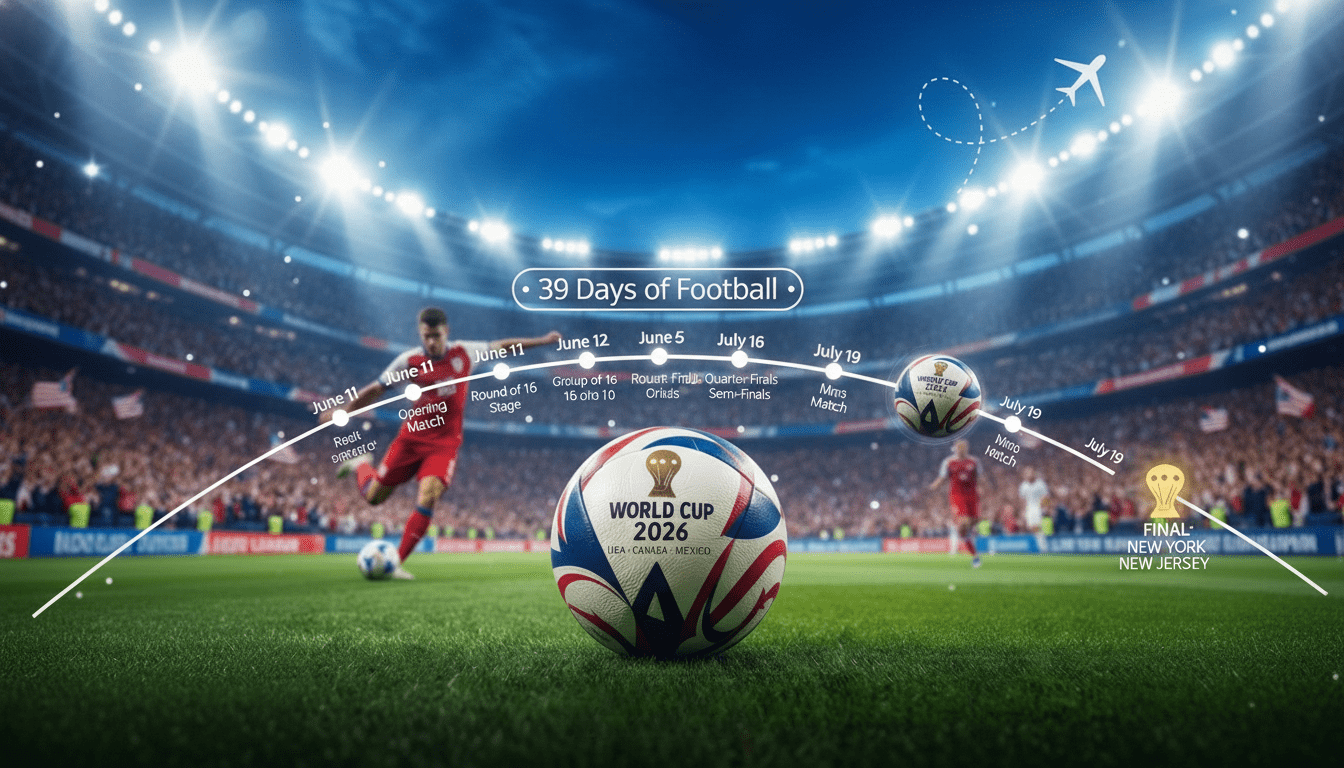
The timeline relies on a highly compressed 39-day window. Managing 104 matches requires an unrelenting pace, with certain days featuring up to six separate fixtures running concurrently across different time zones. Here is the operational pacing of the tournament:
The Historic Opening Match
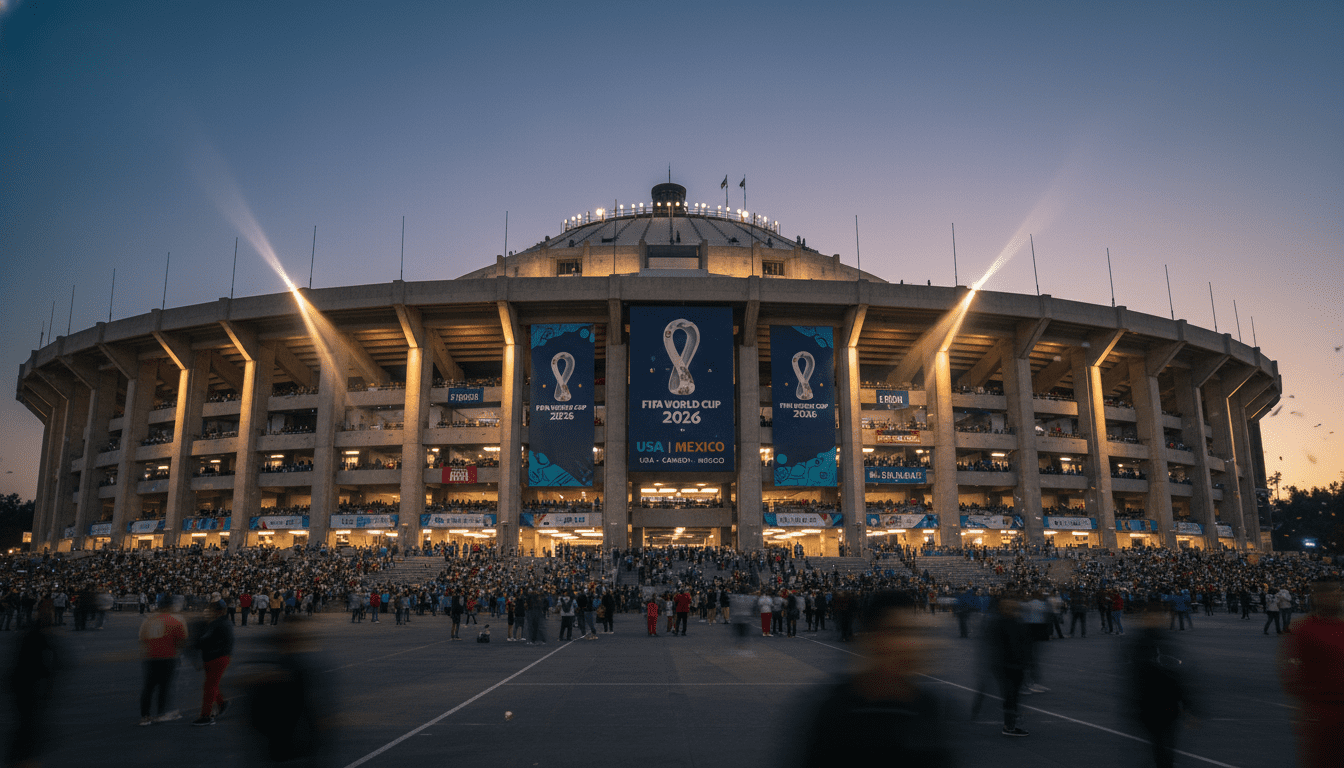
The tournament launches at the legendary Estadio Azteca in Mexico City, where host nation Mexico will face South Africa. Estadio Azteca will cement its legacy by becoming the first stadium globally to host three World Cup opening matches.
The Group Stage Marathon
A relentless schedule of 72 matches played continuously. Savvy bettors will closely monitor the "Wildcard" standings as teams battle for the crucial best third-place spots.
Knockout Bracket Activation
The sudden-death phase begins with the new Round of 32, funneling the survivors through the Round of 16, Quarter-finals, and Semi-finals.
The World Cup Final
The ultimate champion will be crowned at MetLife Stadium (officially New York/New Jersey Stadium), concluding the epic 104-match saga.
Turn Your Football Knowledge Into Profit
104 matches mean 104 opportunities to win big. Don't just watch from the sidelines—dominate the 2026 World Cup with Falcon Play. Unlock industry-leading odds, instant in-play betting, and exclusive sports bonuses designed for true football strategists.
💰 Bet on the World Cup Now